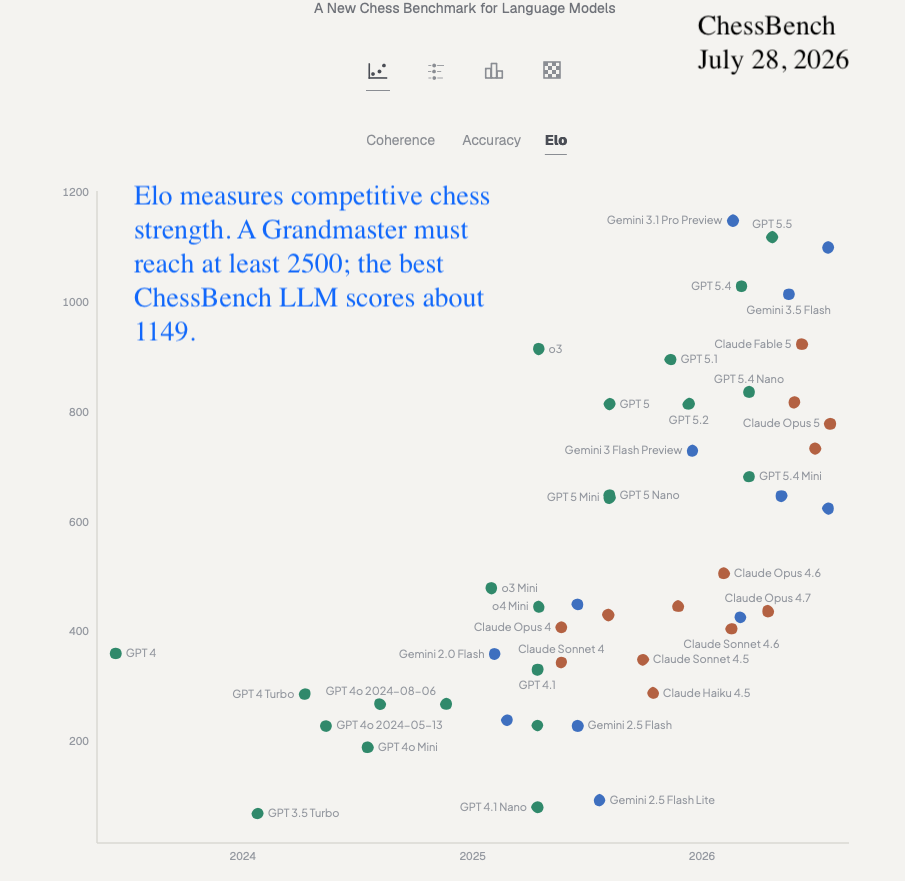
Hallucinations and model collapse are the computational tell of eventual breakdown: without the supervisory input of human intelligence, LLMs may continue recursively generating text, but coherence, meaning, and truth progressively degenerate and fail.

Image AI Generated.
Artificial intelligence does not sustain itself. It begins with human language texts and images, human knowledge, human purposes and human standards. When it is repeatedly trained on its own output, those foundations are progressively weakened. Rare information disappears. Errors are amplified. Language becomes narrower, flatter and less meaningful. Eventually, even the model’s ability to combine ideas coherently begins to deteriorate. That is model collapse. For example, see Model Collapse as Cultural Evolution by Gao et. al. (arXiv:2605.23054v1, May 2026).
Model collapse suggests that recursive statistical reproduction by LLMs is not intrinsically self-correcting or indefinitely creative. Without independent grounding, evaluation, and selection, successive generations amplify prior biases, lose low-frequency information, and eventually degrade even their compositional structure. Supervisory human intelligence appears to be necessary — not for every immediate improvement — but for establishing and maintaining the standards by which informational coherence, relevance, and truth are preserved.
The Principle of Conservation of Information
The Principle of Conservation of Information holds that specified or functional information will remain stable or decline unless it is sustained by intentional input from a conscious intelligence. Model collapse provides a practical illustration: when a generative AI system is trained repeatedly on its own synthetic output rather than on original human-created material, informational coherence deteriorates, errors and biases accumulate, rare meanings disappear, and the language can eventually become degenerate or nonsensical. The process resembles the “error catastrophe” discussed in origin-of-life research, where repeated copying without adequate correction produces increasing informational damage. In both cases, a closed system does not generate an unlimited supply of new meaning; without intelligent supervision, correction and selection, it progressively consumes and degrades the information it inherited.
See: Dembski WA (2025) The Law of Conservation of Information: Search Processes Only Redistribute Existing Information. BIO-Complexity 2025 (2):1-58. doi:10.5048/BIO-C.2025.2.
The Law of Conservation of Information raises the prospect of a regress that was touched on in Section 4. There, in the treasure hunt example, the treasure had a very small probability, call it p (the baseline probability), of being successfully found on its own [on a large island]. Consequently, the treasure hunter went to the offices of the mapmaker Rand McNally to find a map that, with substantially bigger probability, call it q (the improved probability), would help find the treasure. But finding such a map, according to the Law of Conservation of Information, has probability no more than p/q, which sets an upper bound on the probability of a successful search for a search (the S4S probability).
Undeterred by the failure of this search for a search to raise the probability of successfully carrying out the original search, the treasure hunter might now try to find a way to locate a successful search for a search for a search (S4S4S), in effect bootstrapping the problem of finding the treasure to higher levels of search. Thus, the treasure hunter might visit the offices of a search index company (a subdivision of Google, perhaps) that can provide instructions to find a map at the offices of Rand McNally that, in turn, can successfully find the treasure. The search index company might then provide instructions such as:
“At the Rand McNally offices, take the elevator to the fifth floor, take a right and enter the fifth door on the left, and then look at the hundred and seventh filing cabinet, open the bottom drawer, and take out the eighty-ninth map counting from the front.”
But the search index company will have a plethora of such instructions, most of which will not yield a successful search for a search and so will not help with the original search.
The bottom line is that just as the conservation of information applies to the S4S, it also applies to the S4S4S, the S4S4S4S, and so on indefinitely.
According to the principle of conservation of information, no matter how many levels of probabilistic “search” or “training iterations” are added, the functional information cannot exceed the initial human input unless a conscious agent intervenes to provide error correction and new meaning. Thus, the “regress” confirms that AI is a tool for augmenting human intelligence rather than a system capable of replacing the human mind as a source of information.
AI can transform, combine, search, and redistribute information, but the knowledge that makes those operations successful must be supplied by its designers, training data, or other external sources.
The Future Is Neuro-Symbolic
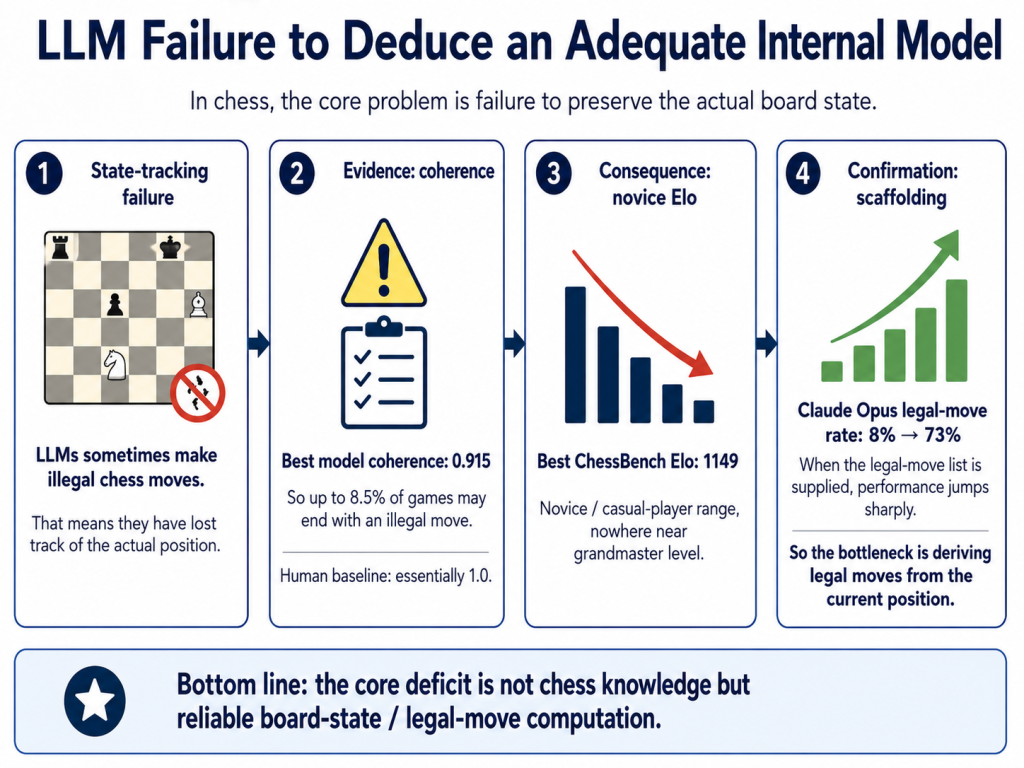
Systems such as Claude Code no longer rely on a self-sufficient Large Language Model (LLM). The language model provides flexible generation, but Anthropic surrounds it with substantial logical guardrails that constrain, check, route, and correct what it does. For example, consider the leaked 3,167-line print.ts component: instead of letting the model probabilistically recognize and handle every output pattern, the system uses hundreds of explicit branches and deeply nested if–then rules so particular inputs produce predictable results. These guardrails compensate for the LLM’s unreliability by imposing intelligent structure, consistency, and control. The larger conclusion is that scaling a neural model alone is not enough for dependable AI; useful systems increasingly combine an LLM with symbolic rules, tools, loops, validators, and ordinary programs that serve as guardrails around it.
Belle, V., & Marcus, G. (2026). The Future Is Neuro-Symbolic: Where Has It Been, and Where Is It Going?. Proceedings of the AAAI Conference on Artificial Intelligence, 40(48), 40954–40961. https://doi.org/10.1609/aaai.v40i48.42130
Logical systems such as Maple, Mathematica, and the Lean theorem prover can also serve as guardrails, providing the precision and symbolic reasoning that LLMs lack in mathematics and coding. That can make the output more dependable, but it also means the intelligence is again inherited from the people who designed the rules, proof systems, algorithms, and software around it. In that sense, neuro-symbolic AI does not eliminate human-generated logic; it embeds and operationalizes it. Human based guardrails are needed to prevent a collapse into gibberish.
Neuro-symbolic AI represents a promising (and perhaps only) approach to addressing the limitations of purely neural or purely symbolic systems. By combining the pattern recognition capabilities of neural networks with the reasoning power of symbolic systems, neuro-symbolic approaches offer potential solutions to challenges in areas such as structured reasoning, knowledge integration, explainability, and reliability..